Liquid Gold and Digital Mines: IoT-Based Smart Water Management and E-Waste Reward Systems

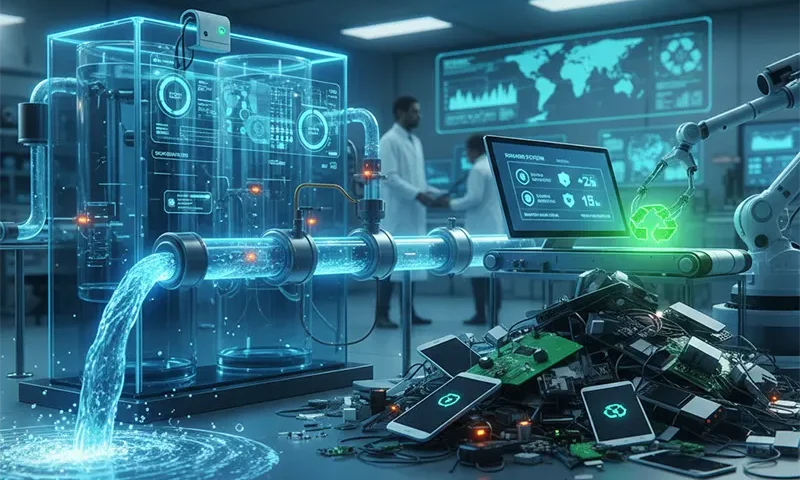
As the global population surges toward 8.5 billion, our urban centers are facing a double-edged environmental crisis: the accelerating depletion of “liquid gold”—fresh water—and the toxic accumulation of “digital mines”—electronic waste (e-waste). Traditional management systems are no longer sufficient; they are reactive, manual, and disconnected. However, the maturation of the Internet of Things (IoT) offers a transformative path forward. By weaving a web of intelligent sensors and incentivized behavioral models, we can move toward a “Closed-Loop Smart City” where resources are monitored in real-time and waste is treated as a high-value asset.

Part 1: IoT-Driven Smart Water Management

Water scarcity is often exacerbated not just by climate change, but by invisible inefficiencies. In many aging cities, up to 30% of treated water is lost to leaks before it ever reaches a faucet. IoT-driven management shifts the paradigm from “break-fix” to “predict-and-prevent.”

Precision Monitoring and Acoustic Intelligence

The first layer of … Read More

The Power of Geopatriation: Leveraging Sovereign Clouds for Data Residency Compliance

The digital era was built on the promise of a “borderless” internet. For a decade, the prevailing strategy for global enterprises was simple: move everything to a handful of massive, centralized public cloud providers. However, as we move through 2026, that era is ending. A rising tide of digital nationalism, complex privacy mandates, and geopolitical instability has forced a strategic pivot.

Enter geopatriation—the strategic relocation of data and digital assets back to the legal jurisdiction of their origin. No longer just a niche concern for banks or government agencies, geopatriation has become a boardroom priority. At the heart of this shift is the Sovereign Cloud, a model designed to reconcile the efficiency of cloud computing with the absolute requirements of local law.

The Challenge: Data Gravity vs. The Long Arm of the Law

The central tension in modern IT is the conflict between global cloud operations and local … Read More

AI Ethics and Bias Detection: Project Ideas for High School Students

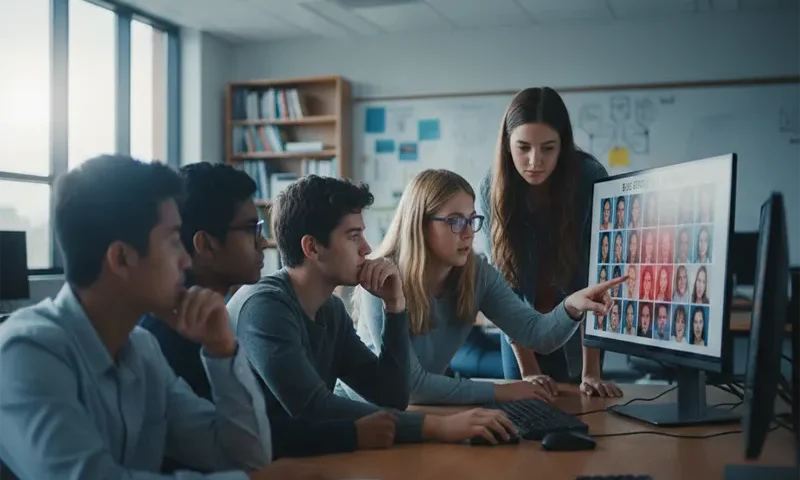
Have you ever noticed how some online ads seem to read your mind, or how a social media algorithm keeps showing you content you already agree with? That’s Artificial Intelligence (AI) at work, making predictions and decisions based on vast amounts of data. While AI promises incredible advancements, it also carries a hidden risk: bias. Just like humans, AI can be unfair, make mistakes, and even perpetuate societal prejudices if not designed and monitored carefully. For high school students, understanding and tackling AI ethics isn’t just a fascinating academic exercise—it’s preparing you to be the architects of a fairer, smarter future.

The Mechanics of Bias

So, how does bias sneak into an AI system? It’s not usually malicious intent; rather, it’s often an accidental byproduct of how AI learns. Imagine teaching a child about cats using only pictures of fluffy, orange tabbies. If they later see a sleek, black … Read More

Physical AI and Collaborative Robotics: The Smart Manufacturing Revolution of 2026

For decades, industrial robots were the “strong, silent types” of the factory floor—powerful machines bolted to the ground, performing repetitive tasks behind heavy safety cages. But as we move through 2026, those cages are coming down. We have entered the era of Physical AI, where artificial intelligence has finally “grown a body.”

In 2026, the global industrial robotics market has surged toward a $54 billion valuation, driven by a generational shift from rigid automation to intelligent, self-evolving systems. This isn’t just about faster arms; it’s about a fundamental transformation in how machines perceive, reason, and interact with the physical world.

The Rise of Physical AI: From Code to Contact

The biggest story of 2026 is the transition from “Digital AI” (chatbots and image generators) to Physical AI. While previous generations of robots relied on thousands of lines of explicit code for every movement, today’s systems are powered … Read More