Beyond the Screen: VR and AR Immersive Learning Project Ideas for the 2026 College Campus

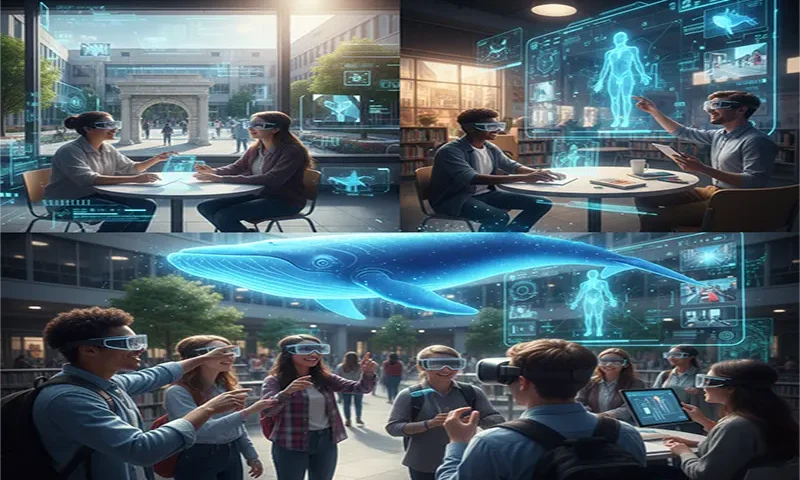
In 2026, the traditional lecture hall is no longer the sole center of the university experience. The arrival of spatial computing has shifted the educational paradigm from “observing” to “inhabiting.” As colleges strive to bridge the gap between theoretical knowledge and career readiness, Virtual Reality (VR) and Augmented Reality (AR) have emerged as the primary catalysts for immersive learning.

The “Metaversity”—a persistent, shared virtual campus—has moved from a buzzword to a functional reality. Enabled by 5G-Advanced networks and lightweight, high-fidelity headsets, students are now engaging in projects that were physically impossible or financially prohibitive just five years ago.

The Pedagogy of Presence

Why does VR work so much better than a textbook? The answer lies in spatial presence—the psychological state where a user’s sensory system is so thoroughly engaged that they feel they are “there” in the environment. In 2026, educational researchers have solidified the data: students retain … Read More


Liquid Gold and Digital Mines: IoT-Based Smart Water Management and E-Waste Reward Systems

As the global population surges toward 8.5 billion, our urban centers are facing a double-edged environmental crisis: the accelerating depletion of “liquid gold”—fresh water—and the toxic accumulation of “digital mines”—electronic waste (e-waste). Traditional management systems are no longer sufficient; they are reactive, manual, and disconnected. However, the maturation of the Internet of Things (IoT) offers a transformative path forward. By weaving a web of intelligent sensors and incentivized behavioral models, we can move toward a “Closed-Loop Smart City” where resources are monitored in real-time and waste is treated as a high-value asset.

Part 1: IoT-Driven Smart Water Management

Water scarcity is often exacerbated not just by climate change, but by invisible inefficiencies. In many aging cities, up to 30% of treated water is lost to leaks before it ever reaches a faucet. IoT-driven management shifts the paradigm from “break-fix” to “predict-and-prevent.”

Precision Monitoring and Acoustic Intelligence

The first layer of … Read More

AI Ethics and Bias Detection: Project Ideas for High School Students

Have you ever noticed how some online ads seem to read your mind, or how a social media algorithm keeps showing you content you already agree with? That’s Artificial Intelligence (AI) at work, making predictions and decisions based on vast amounts of data. While AI promises incredible advancements, it also carries a hidden risk: bias. Just like humans, AI can be unfair, make mistakes, and even perpetuate societal prejudices if not designed and monitored carefully. For high school students, understanding and tackling AI ethics isn’t just a fascinating academic exercise—it’s preparing you to be the architects of a fairer, smarter future.

The Mechanics of Bias

So, how does bias sneak into an AI system? It’s not usually malicious intent; rather, it’s often an accidental byproduct of how AI learns. Imagine teaching a child about cats using only pictures of fluffy, orange tabbies. If they later see a sleek, black … Read More

The Role of Machine Learning in Preventing Phishing Attacks

Phishing attacks continue to pose a significant threat to individuals and organizations, with cybercriminals continually evolving their tactics to deceive unsuspecting victims. In response to this growing threat, the role of machine learning in preventing phishing attacks has become increasingly vital in the realm of cybersecurity.

1. Enhanced Detection Capabilities

Machine learning algorithms have the ability to analyze huge volumes of data to identify patterns and anomalies, making them invaluable in detecting phishing attempts. By analyzing email content, user behavior, and network traffic, machine learning models can identify subtle indicators of phishing attacks that would otherwise go unnoticed by traditional security measures.

2. Real-Time Threat Analysis

One of the key advantages of machine learning in the context of phishing prevention is its ability to conduct real-time threat analysis. By continuously learning from new data and adapting to emerging patterns, machine learning systems can swiftly identify and respond to evolving phishing … Read More

Benefits of AI-driven Automation in Warehouse Logistics Operations

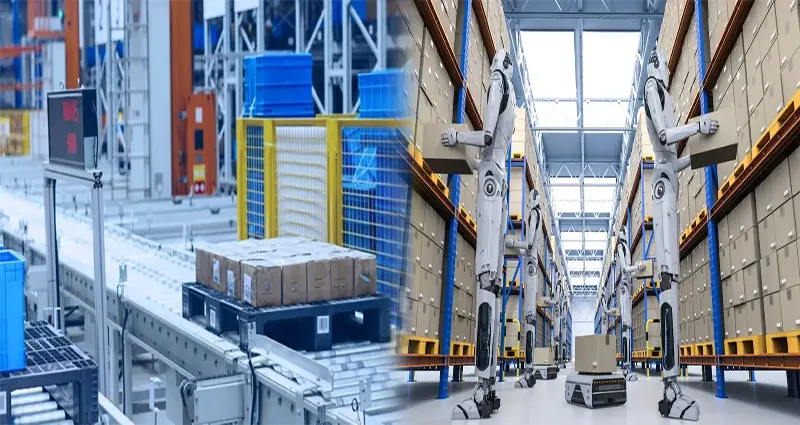
In recent years, the integration of artificial intelligence (AI) in warehouse logistics operations has revolutionized the way businesses manage their supply chains. This technological advancement has brought about numerous benefits that have significantly optimised warehouse efficiency and productivity.

1. Increased Efficiency and Accuracy

One of the key benefits of AI-driven automation in warehouse logistics operations is the significant increase in efficiency and accuracy. AI-powered systems can perform tasks such as inventory management, order picking, and route optimization with a level of precision that was previously unattainable. This leads to reduced errors and faster order processing times, ultimately improving overall operational efficiency.

2. Enhanced Inventory Management

AI algorithms can analyze historical data and predict future demand trends more accurately than traditional methods. This allows warehouse managers to optimize inventory levels, reduce stockouts, and minimize excess inventory. As a result, businesses can save on storage costs and ensure a more streamlined supply … Read More