
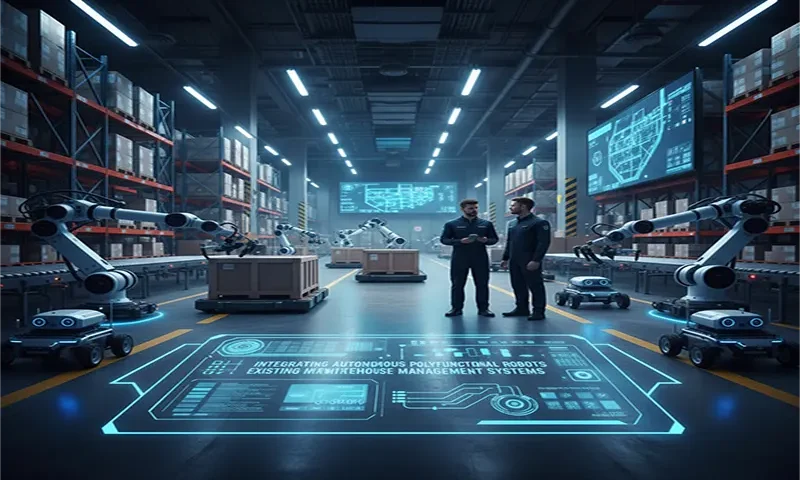
Integrating autonomous polyfunctional robots into existing warehouse management systems
The logistics industry is currently moving from single-task automation to the era of Polyfunctional Robotics—autonomous platforms that can dynamically switch between picking, sorting, and palletizing. However, for most enterprises, the barrier to adoption isn’t the hardware; it’s the “Brownfield Integration Gap.” Legacy Warehouse Management Systems (WMS) are historically designed for linear, human-centric tasks. Integrating robots that change roles throughout a shift requires a move away from rigid, one-to-one connections toward a modular, API-first orchestration layer. This article explores how to bridge this gap using the Robotics Control Layer (RCL) and international interoperability standards like VDA 5050.
1. Introduction: Beyond the Single-Task Bot
Traditional warehouse automation relied on “fixed-function” machines: a conveyor belt moved boxes, a sorter pushed them into bins, and a palletizer stacked them at the end. Polyfunctional robots break this silos. These machines use modular end-effectors (grippers, vacuum suction, or forks) and AI-driven vision to pivot … Read More
